

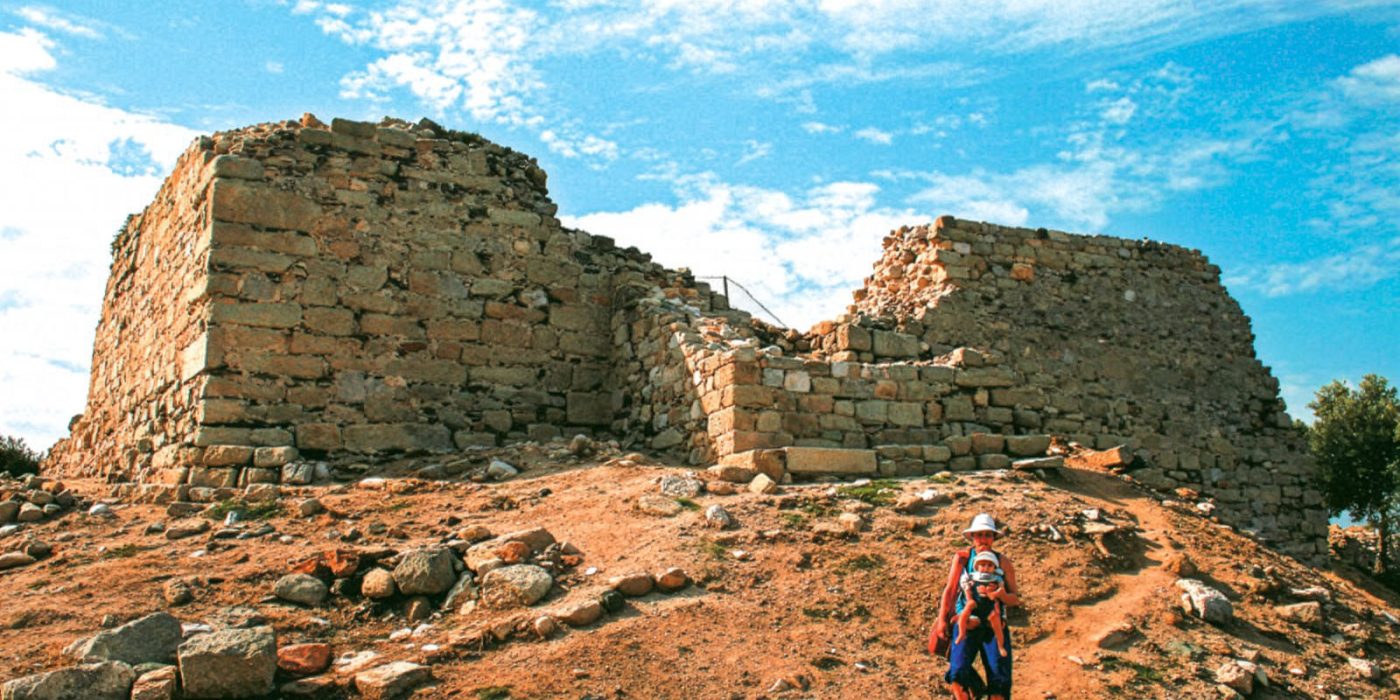
Greek mythology often refers to Halkidiki: in Kassandra lies buried the giant of earthquakes, Enceladus. Mount Athos was formed from the rock thrown against the gods by the giant of the same name, while Sithonia owes its name to Sithon, the son of Poseidon. The word “myths” may mean stories, but they also imply the effort made since ancient times to interpret the peculiarities of this land.
Scientific research has shown that the geomorphology of prehistoric Halkidiki was very different from today. The flora and fauna were also different. Fossil remains of elephants and other species have been found in Nikiti, Vrasta, Triglia and elsewhere, indicating a time without human presence.
Findings from the Petralona Cave show that human presence exceeds 700,000 years, while the skull of the archaic human is estimated at around 200,000 years. Organized societies appear from 4000 BC, with the first inhabitants being Thracians and Pelasgians.
Sithonia is the middle peninsula of Halkidiki, between the Toroneos and Singitic gulfs, ending at Cape Drepano.
In 1922, with the settlement of refugees from Asia Minor, a new historical period began. 27 new villages were created. Metamorfosi was a dependency of the Monastery of Dionysiou and in 1950 the first children’s camp operated.
The main occupations of the residents are tourism and fishing. The beach has been awarded the Blue Flag. There are schools and cultural activities. Nearby is the Hermitage of Saint John the Forerunner (1975).